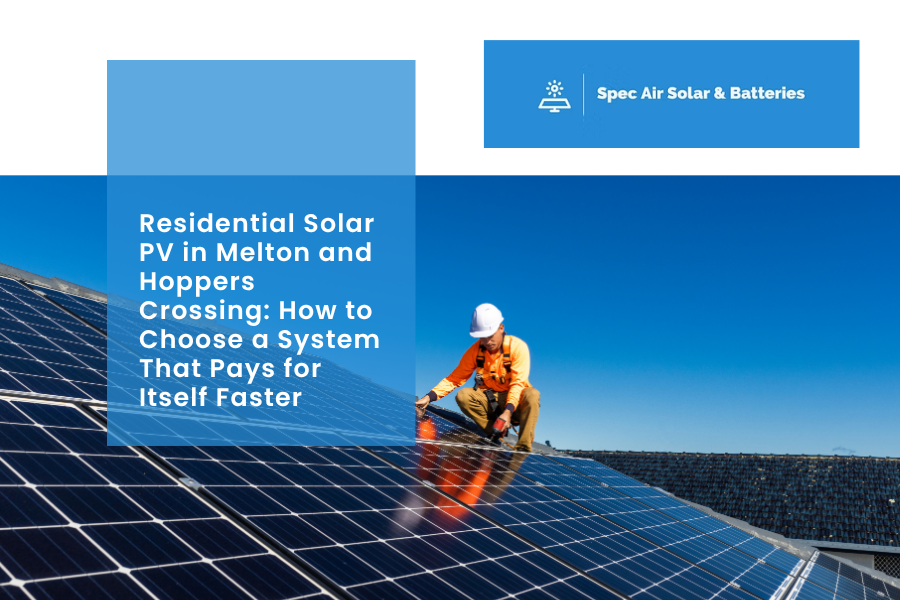
With utility bills continuing to rise across Victoria, outer-western suburbs like Melton and Hoppers Crossing are seeing a massive boom in rooftop solar installations. It makes total sense because the West has big roofs and lots of sunshine, but shopping for solar can be tricky since the market is flooded with confusing deals and cheap systems that fail over the long haul.
If you want a residential solar PV Melton Hoppers Crossing system that does not just sit on your roof but actively slashes your power bills and pays for itself in record time, you need a targeted strategy. Designing a system for maximum return on investment requires looking past the lowest sticker price and aligning the technology with local western-suburb weather patterns, your family’s daily energy habits, and available government support.
When browsing a solar system, Melton Victoria households are frequently steered toward a standard 6.6kW panel configuration paired with a 5kW inverter. This specific combination has become the sweet spot for residential properties across Hoppers Crossing and Melton, and there is a very deliberate economic reason for it.
The Oversizing Advantage
An inverter is sort of the core of your solar setup; it turns the raw direct current, (DC) power from your panels into the alternating current (AC) power your household appliances actually use. When you pair 6.6kW solar panels with a 5kW inverter, you can run the system in a safe way that’s oversized by about 133%.
Solar panels don’t usually work at 100% output all the time because of cloud cover, winter tilt angles, or the strong heat in high summer. So, having that extra panel capacity means your inverter tends to reach its top 5kW output earlier in the morning and keeps that strong performance for way longer into the afternoon.
Maximizing Small-scale Technology Certificates (STCs)
This specific system size perfectly balances upfront capital costs with federal financial incentives. Under Australia’s renewable energy framework, your system qualifies for an upfront discount based on its total panel capacity, not the inverter size. A 6.6kW array attracts enough STCs to significantly lower your out-of-pocket costs, creating a rapid path to full financial payback.
A common blunder with residential solar in Hoppers Crossing or Melton is just putting all the panels on a north-facing roof surface. Yes, north-facing panels do tend to make the biggest total volume of raw kilowatt-hours across the whole year, but they may not give you the quickest financial payback for your specific household routine.
Consider how your household consumes energy throughout the day:
Think about when your home uses electricity, like this:
By self-consuming your solar energy as it is generated rather than exporting it back to the grid, you save around 25 to 30 cents per kilowatt-hour on avoided grid power, compared to earning only a fraction of that as a solar credit.
To secure the best value solar PV Victoria has to offer, you must wrap your strategy around the available state government subsidies administered by Solar Victoria. For eligible owner-occupiers and landlords, these financial programs drastically lower the initial capital investment required.
The Solar Panel (PV) Rebate and Loan
Eligible households can access a direct upfront rebate of up to $1,400 off the total purchase price of a certified solar panel system. To help cover the remaining balance without creating immediate budget strain, Solar Victoria offers an interest-free loan option matching the rebate amount at up to $1,400. This loan is paid back over a manageable four-year period, meaning your monthly power bill savings can effectively cover the loan repayments.
Essential Income Threshold Changes
If you are planning to request a solar quote for Melton or Hoppers Crossing wide, timing is everything. State policy guidelines dictate that the combined household taxable income eligibility cap for the Solar Homes program shifts to $150,000 or less per year. Keeping abreast of these income caps ensures you apply at the right moment to secure your funding approval smoothly.
Evaluating the Payback: Panels vs Batteries in the West
A question every western-suburb homeowner asks is whether they should add a solar battery immediately or stick to panels alone. To achieve the fastest possible payback time, the math remains very clear.
The Panels-Only Track
A well-designed 6.6kW solar panel system without storage typically achieves complete financial payback within 3 to 5 years in the Melton and Wyndham local government areas. Once that milestone is cleared, every single kilowatt-hour your roof generates becomes 100% free profit for the remaining 20+ year lifespan of the hardware.
The Storage Track
While federal battery incentives through the Cheaper Home Batteries framework can provide a solid upfront discount based on usable capacity, home batteries still carry a higher capital cost. Adding storage extends your overall system payback period to around 7 to 10 years.
If your primary objective is pure financial payback speed, start with a high-quality, battery-ready hybrid inverter and a robust panel array. This allows you to harvest immediate bill savings while giving you the flexibility to plug in a battery seamlessly later as storage tech costs continue to moderate.
The booming outer-western corridor has unfortunately attracted its fair share of literal “white-van” operators offering impossibly cheap 6.6kW systems for rock-bottom prices. Falling into this trap destroys your payback calculation because cheap components regularly fail long before the system can pay for itself.
When assessing a home solar installer Victoria wide, look for these non-negotiables:
How long does it take for a solar system to pay for itself in Melton?
For a standard, high-quality 6.6kW system installed on an unshaded roof in Melton, the typical financial payback period is between 3 and 5 years. This timeline can be optimized further by scheduling high-energy chores like dishwashers and clothes dryers to run automatically during peak daylight hours.
Can I still get a solar rebate if my home is currently under construction?
Yes. The Solar Victoria Homes program allows owner-occupiers to apply for the standard $1,400 solar panel PV rebate and the matching interest-free loan while their house is actively being built, allowing your solar infrastructure to be integrated seamlessly into the construction phase.
Will my solar system still generate power on overcast, rainy Melbourne days?
Yes. Solar PV panels operate using daylight energy rather than direct thermal heat. While production will naturally drop during heavy cloud cover or a stormy afternoon, modern high-efficiency panels are engineered to capture ambient, scattered light, ensuring your home still receives a steady baseline of solar generation.
Is Hoppers Crossing subject to solar grid export limits by power networks?
Certain pockets of Hoppers Crossing and the wider Wyndham region can experience localized solar export limits imposed by Powercor due to high rooftop solar density. A professional installer will review your specific street data upfront and configure your system to maximize self-consumption, so export limits do not hurt your savings.
What is the difference between a microinverter and a traditional string inverter?
A standard string inverter manages your entire panel array as a single group, meaning if one panel gets shaded by a tree or chimney, the output of the whole string drops. Microinverters are small units attached to individual panels, ensuring each panel operates completely independently for optimal performance on complex, shaded roofs.
How often do residential solar panels require professional cleaning or servicing?
Rooftop solar systems require surprisingly little day-to-day upkeep. Because Melton and Hoppers Crossing get regular winter rainfall and have flat coastal wind patterns, your panels are mostly self-cleaning. We recommend booking a professional electrical safety check and system audit every three to five years to ensure peak performance.
Do not leave your long-term energy independence to chance. Choosing the right residential solar PV system requires careful planning, quality components, and localized design expertise to ensure you lock in the fastest possible payback period.
At SpecAir Solar, we specialise in premium, high-efficiency solar and battery installations across Melton and Hoppers Crossing. As a trusted, accredited home solar installer Victoria wide, we tailor every system layout to match your roof space, family budget, and daily power habits, while taking care of the entire Solar Victoria rebate process on your behalf.
Ready to wipe out your power bills? Contact the expert team at SpecAir Solar today to request your comprehensive, obligation-free solar quote and customized roof design
With utility bills continuing to rise across Victoria, outer-western suburbs like Melton and Hoppers Crossing are seeing a massive boom in rooftop solar installations. It makes total sense because the West has big roofs and lots of sunshine, but shopping for solar can be tricky since the market is flooded with confusing deals and cheap […]
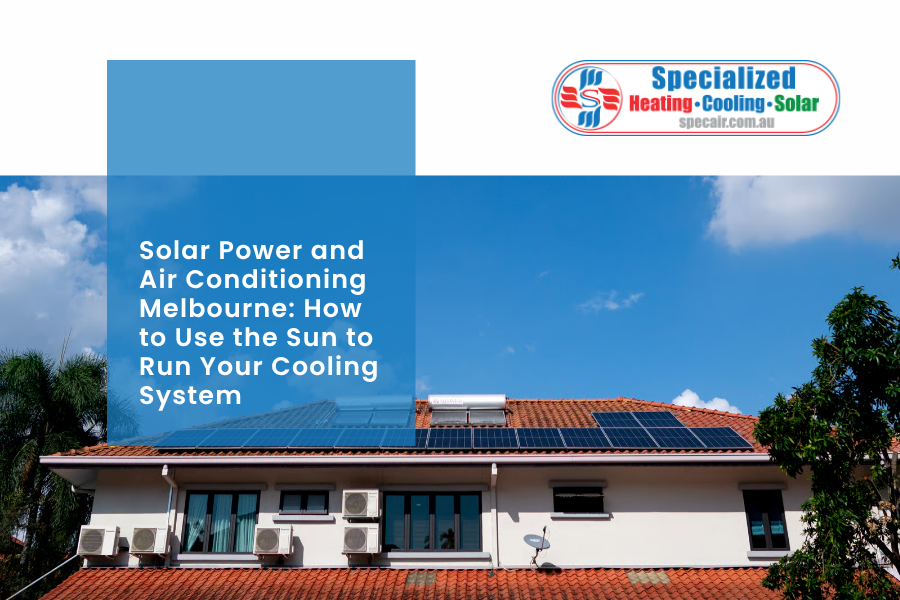
The summer in Melbourne can be very hot, and your house can quickly feel like an oven. Turning on the cooling helps, but you immediately start worrying about a high power bill. For families from the inner suburbs to western areas, staying comfortable without spending too much money is a big problem. The good news is that you can use the hot […]
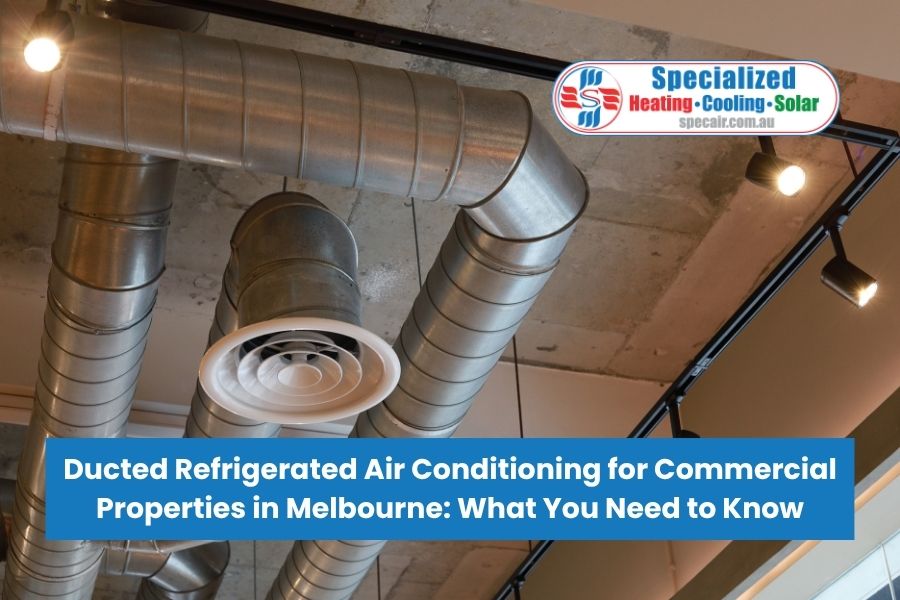
Running a business, managing a bustling office, or looking after a commercial property in Victoria means indoor comfort is always on your radar. Anyone who lives here knows the local weather can swing from a freezing morning to a scorching afternoon in a matter of hours, so relying on an old or underpowered system is […]
Melbourne weather changes very fast. One day it can be 40 degrees, and the next day it is cold. For homeowners in Victoria, finding an air conditioner that can handle these changes is very important. While a single split system works well for one room, a multi-head split system Melbourne families often choose is the best way to keep the whole […]
