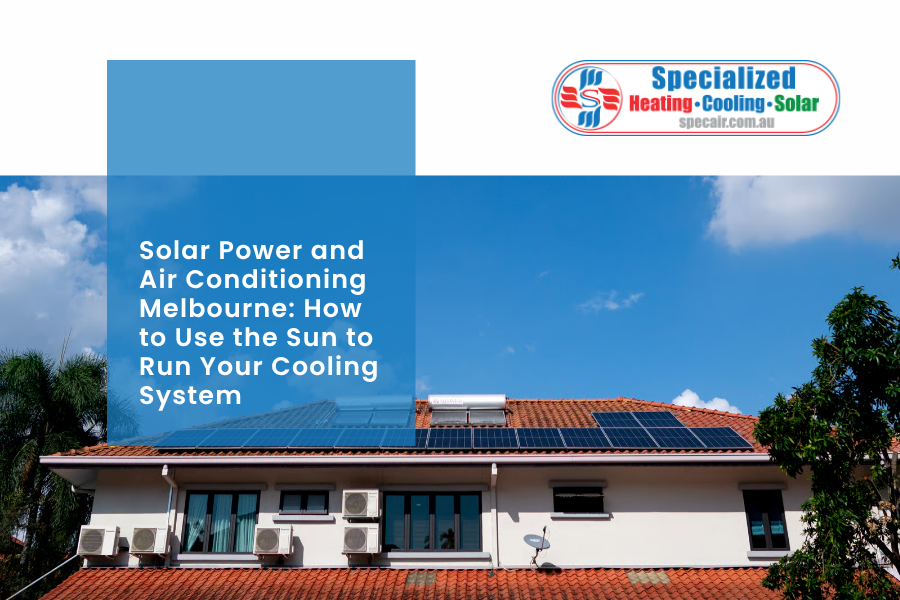
The summer in Melbourne can be very hot, and your house can quickly feel like an oven. Turning on the cooling helps, but you immediately start worrying about a high power bill. For families from the inner suburbs to western areas, staying comfortable without spending too much money is a big problem. The good news is that you can use the hot sun to lower your bills with a solar energy cooling system in Melton.
Choosing solar power air conditioning Melbourne homes need is a smart way to save money. Air conditioners use the most electricity during the middle of the day when the weather is hottest. This is the exact same time your solar panels make the most power. This perfect timing means you can easily reduce air conditioning electricity bills solar panels run by using free power made right on your roof.
To successfully run AC on solar panels Victoria families just need to match their cooling unit to their solar size. For most homes, a standard solar system makes plenty of power to run a high-efficiency solar powered split system Melbourne summers require. By setting up a modern solar HVAC Melbourne system, you can cool your home for free during the day and stay comfortable all summer without worrying about the cost.
Using a solar energy cooling system in Melton or broader Melbourne makes sense because of when we use power versus when we make it.
1. Free Peak-Time Cooling
On a 38°C January afternoon, thousands of Victorians flick on their cooling units roughly together, usually somewhere between 2:00 PM and 6:30 PM. The energy retailers set their most painful prices during those peak windows.
But here’s the twist; your solar panels usually peak earlier, with the strongest output around 10:00 AM to 4:00 PM. If you run your air conditioner during that stretch, you avoid paying pricey grid electricity. Instead, you feed free solar energy straight into your cooling system.
2. Handling Melbourne’s Weather
Melbourne’s weather changes fast. We often get days of extreme heat followed by a sudden cool change. On very hot days, an air conditioner works extra hard to keep your home at a comfortable 22°C. Running a dedicated solar HVAC Melbourne setup ensures that this extra workload does not result in a shocking bill at the end of the month.
Now, you can’t simply plug an air conditioner straight into a solar panel. You need a system to safely manage power. There are two main ways to run AC on solar panels in Victoria:
1. Standard Grid-Connected Solar (Most Common)
Your solar panels create Direct Current (DC) power. A solar inverter turns this into 240-volt Alternating Current (AC) power, which is what your home appliances use.
When you turn on your AC on a sunny day, the electricity flows straight from the inverter into your cooling unit. If your AC needs 2 kW of power and your solar panels are making 5 kW, the unit runs entirely for free. The extra 3 kW can power other things or be sent back to the grid for credit.
2. Direct-DC Hybrid Solar AC Units
A newer choice is the solar powered split system Melbourne locals are starting to use. These systems connect directly to a few dedicated solar panels using raw DC power. This removes the minor energy loss that happens during power conversion. If a cloud blocks the sun, the system smoothly switches to grid power, so your home stays cool without stopping.
One common hiccup is getting a solar system that’s undersized for the way your AC actually behaves. To steer clear, you need to sort out the difference between cooling capacity and real electrical consumption.
Note: a “7 kW air conditioner” does not mean it pulls 7 kW of electricity every hour. The 7 kW is cooling capacity, meaning the amount of heat it can remove. With today’s inverter-style technology, it typically draws closer to about 2 kW of electrical power from your home.
Here is a quick size guide for Melbourne homes:
| Home Size | Typical AC Unit Size | Avg. Electrical Power Draw | Recommended Solar Array |
| Apartment / Unit | 2.5 kW Split System | ~0.7 kW | 3.0 kW to 5.0 kW Solar |
| Medium Family Home | 5.0 kW – 7.1 kW Split | ~2.0 kW | 6.6 kW Solar (Most popular choice) |
| Large Two-Storey Home | 10 kW – 14 kW Ducted | ~4.0 kW | 10.0 kW to 13.2 kW Solar |
To reduce air conditioning electricity bills with solar, make sure your solar array can output more power during the day than your air conditioner draws when running.
To get the most value out of your system, you should change how and when you cool your home.
1. Use the Pre-Cooling Strategy
Turning your AC down for the evening at 5:30 PM, say, to 18°C is a pretty rough habit. By then the sun is sliding away, and your solar output drops quickly, meaning you end up using pricier grid electricity. Also, your walls and furniture have been holding onto heat all day like little batteries.
Instead, try this:
2. Use Smart Zone Controls
If you have a ducted solar HVAC Melbourne system, turn off the cooling in empty rooms like laundry or spare bedrooms. Focus on the air only where you are sitting or working to get the best value from your solar power.
3. Tips for the Melton Climate
Homes out west toward Melton often get higher temperatures and stronger winds than the coastal eastern suburbs. If you have a solar energy cooling system in Melton, protect your home using these methods:
Daytime cooling is free with solar panels, but hot summer nights can be tough. When hot winds blow through Melbourne at midnight, your house stays warm.
Add a solar battery helps solve this problem. By saving your extra afternoon solar power instead of selling it back to the grid for a tiny credit, you store it for later. When the sun goes down, your home automatically uses battery power. This lets you run your solar powered split system in Melbourne overnight without paying for grid electricity.
Solar systems have an upfront cost, but the Victorian Government offers great incentives to help.
1. Solar Homes Program
Through Solar Victoria, eligible homeowners can get a rebate to lower the cost of installing solar panels. This works alongside federal discounts to drop your final installation bill.
2. VEU (Victorian Energy Upgrades)
If you replace an older gas heater, or an outdated AC, with a newer high efficiency reverse-cycle setup, you might be eligible for extra financial help via the VEU scheme. The whole idea is that high efficiency equipment consumes less electricity, so your solar output can do more, and in practice your system covers the cooling longer.
3. Payback Time
For a standard Melbourne home with a 6.6 kW solar system and a good AC unit, it takes about 3.5 to 5.5 years to win back the cost in savings. And since respectable solar panels can easily run for roughly 25 years, you’re not just getting “back” your cost, you also get quite a lot of low cost cooling well past the point where the solar system is paid off.
Can solar panels run air conditioning on cloudy days in Melbourne?
Yes, but they do make less. Solar panels still work under clouds because they get daylight; however, their output can fall to about 10% or 25% of peak capacity. If your panels aren’t generating enough electricity, your home automatically takes the rest from the grid, so your cooling doesn’t really stop, even when the sky is grey.
How many solar panels do I need to run a split system of AC?
To run a standard 3.5 kW split system (which uses about 1 kW of electricity), you need 3 to 4 modern solar panels. However, because you also need to power your fridge, lights, and TV, it is best to install a full 6.6 kW system (about 15 to 18 panels) to cover your whole home.
Is it better to run my solar air conditioner on a low setting all day?
Yes. Modern air conditioners are designed to keep a steady temperature rather than cooling a freezing room quickly. Turning your AC early in the morning at 24°C keeps the unit running at its lowest, most efficient power level, which perfectly matches the steady flow of solar energy.
Do I need to upgrade to three-phase power to run solar HVAC?
Not usually. Most standard single-phase homes can handle a 5-kW inverter and a 6.6 kW solar array, which is plenty of power for a few split systems. You only need three-phase power if you have a massive double-storey home that requires a large 14 kW or 18 kW ducted system.
Can I run my air conditioner completely off-grid using solar energy?
It is possible, but it is way too expensive for normal suburban homes because you would need a massive number of panels and huge industrial batteries. Staying connected to the Victorian grid is safer for bad weather days and lets you earn money back by selling your extra summer power.
Will running an air conditioner damage my solar batteries?
No, as long as a professional installs your system correctly. Modern solar batteries use a built-in Battery Management System (BMS). This smart computer checks the temperatures and power levels to make sure heavy appliances like air conditioners do not hurt the battery life.
Using solar energy to power your cooling system is a smart way to protect your wallet from rising electricity prices. By matching your cooling habits with the natural sunshine, you can keep your home perfectly comfortable without worrying about the bill.
Don’t wait for the next heatwave to upgrade your home.
Ready to save money and stay cool this summer? Contact the team at Specair today. Our licensed, CEC-accredited Melbourne heating and cooling speialists will design the perfect system for your home and budget. Give us a buzz or fill out our online form for a free, no-obligation chat today!
Gas Ducted Heating Melbourne: How Spec Air Designs and Installs Systems That Keep Homes Warm from Melton to Lynbrook Melbourne winters bring an occasional burst of freezing temperatures, icy winds and chilly mornings. To counter this drop in temperature, small space heaters and single split systems are not powerful enough to keep a whole household […]
Pakenham is a growing area with plenty of new housing estates and older family homes. Keeping your house comfortable through changing Victorian seasons requires a reliable heating and cooling setup. Standard heaters often struggle during hot summer days, while old cooling units fail to keep living rooms warm or cold on winter mornings. Getting a […]
Melbourne winters in the outer south-east bring icy winds, cold mornings, and sudden drops in temperature. Keeping a family home warm and dry needs a central heating system that is strong, reliable, and cheap to run. For local homeowners, booking a professional ducted heating installation in Berwick is the best way to get whole-house warmth […]
It’s easy for Melbourne summer to get very hot. There can be a cool morning but a dry afternoon which equals 40 degrees or more and makes your home feel like an oven. In Victoria, with the severe heat that comes with it, it becomes necessary for every family to keep their home cool, fresh, […]
