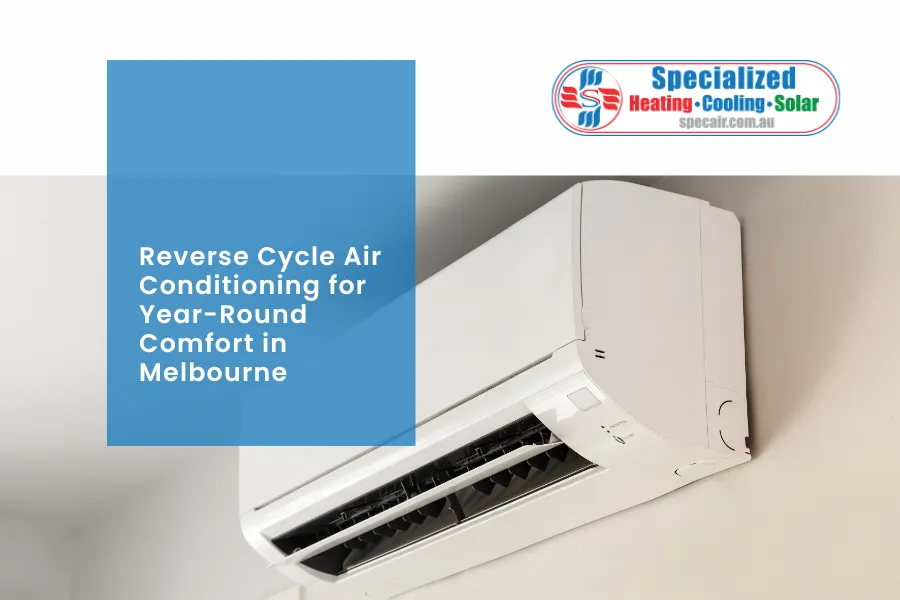
Melbourne weather can shift from warm summer days to cold winter mornings, making reliable indoor climate control important throughout the year. A reverse cycle split system provides both heating and cooling from one system, offering a practical way to maintain comfortable temperatures in individual rooms and living areas.
Continue reading to learn more about reverse cycle air conditioning, how it works and what to consider before installing one in your Melbourne home.
Reverse cycle air conditioning is a heating and cooling system that can operate in both directions. In summer, it removes heat from inside your home and transfers it outdoors. In winter, the process reverses extracting available heat from outdoor air and transfers it indoors.
The term “reverse cycle” refers to the change in refrigerant flow that allows the system to switch between cooling and heating modes. Unlike a conventional electric heater that generates heat directly, a reverse cycle system transfers heat from one location to another.
Reverse cycle systems use a refrigeration cycle to transfer heat between the indoor and outdoor environments. The main components include a compressor, indoor and outdoor coils, an expansion device and a reversing valve.
1. Cooling Mode
When the system is set to cool, warm indoor air is drawn into the indoor unit. The refrigerant absorbs heat from this air before the cooled air is circulated back into the room.
The refrigerant then carries the absorbed heat to the outdoor unit, where it is released outside. The cycle continues until the indoor temperature reaches the selected setting.
2. Heating Mode
When heating is selected, the refrigerant flow is reversed. The outdoor unit absorbs available heat from the surrounding air, even when outdoor temperatures are low.
That heat is transferred through the refrigeration system and released inside the home. The indoor unit then circulates the warm air throughout the room.
A reverse cycle system can offer several practical advantages for homeowners looking for one solution for different seasons.
1. Dual Functionality
A major advantage is having both functions in the same appliance. Instead of relying on a separate heater and cooling system, homeowners can switch between heating and cooling as the season changes.
2. Temperature Control
Split systems allow homeowners to control the temperature of specific rooms or living areas. This can be useful for bedrooms, studies, living rooms and other spaces that require individual temperature management.
3. Convenient Operation
Many modern systems include features designed to make everyday operation easier. Depending on the model, these can include remote controls, timers, sleep settings and smartphone connectivity.
4. AirFiltration
Many reverse cycle air conditioners include filters that capture dust and other airborne particles as air passes through the system. Regular filter cleaning helps maintain airflow and supports a cleaner indoor environment.
Selecting the right system involves more than choosing a unit based on its appearance or maximum capacity. The size and characteristics of the room can influence how effectively the system heats and cools the space.
1. Consider Installation Space
Check out the available installation space for both the indoor and outdoor units. The system size should also suit the room’s dimensions and heating and cooling requirements.
2. Check Product Quality
Look for a reliable system from an established manufacturer with suitable performance, build quality and features for regular household use.
3. Review Warranty Coverage
Check the manufacturer’s warranty terms, including coverage periods and any servicing or installation conditions that may apply.
4. Compare Available Features
Consider useful features such as timers, remote controls, sleep modes and smartphone connectivity based on how you plan to use the system.
5. Check the Return Policy
Review the supplier’s return and exchange conditions before purchasing, particularly if the system has specific installation or product requirements.
6. Consider Energy Efficiency
Compare energy efficiency ratings when assessing different models. An efficient system can help manage electricity consumption when used regularly for heating and cooling.
7. Get Professional Advice
A qualified professional can assess your home layout, room size and heating and cooling requirements to help identify a suitable system and installation approach.
Check the reverse cycle air conditioner regularly for dust build-up, airflow problems, unusual noises and changes in performance.
Choosing the right system is only part of creating a comfortable home. Professional advice and installation can help ensure the system suits the property and performs as expected.
SpecAir is a family owned and operated heating and cooling business with more than 40 years of industry experience. The company has five Victorian locations and provides heating and cooling solutions for residential and commercial properties.
A reverse cycle split system can provide a practical way to manage indoor temperatures throughout Melbourne’s changing seasons. By combining heating and cooling in one appliance, it can provide targeted comfort while offering efficient operation when correctly selected, installed and maintained.
Before investing in a system, consider the room size, insulation, unit placement, energy efficiency and features that suit your household. Professional advice can also help you find a system that meets your home’s specific heating and cooling requirements.
A reverse cycle air conditioner is a system that provides both heating and cooling. It reverses the refrigerant flow to switch between cooling your room in summer and heating it during winter.
Yes, reverse cycle air conditioners can be energy efficient because they transfer heat rather than generating it directly. Efficiency depends on the model, system size, operating conditions and how the system is used.
Yes. In heating mode, the system extracts heat from the outdoor air and transfers it indoors. Modern systems can operate effectively in cold conditions, although performance varies between models.
Consider the room size, insulation, windows, sunlight exposure, ceiling height and overall property layout. A professional assessment can help determine the appropriate capacity for efficient heating and cooling.
The cost depends on the system size, brand, features, installation requirements and property layout. Comparing the total purchase and installation costs can help you select a system that suits your budget and heating and cooling needs.
Keeping your home warm during a Melbourne winter does not mean every room needs to be heated all day. A zoned ducted heating system lets you direct warmth to the areas your household uses most. Read on to understand how it works and how zoning can make home heating more flexible. How Ducted Heating Works […]
With a variety of weather conditions in Victoria, it is important to prepare your home for those sudden changes, hot summer days and cold winter nights. Melbourne is known for its ‘four seasons in a day’ which means in times of extreme weather, it is essential to have a heating/cooling system of a high standard. […]

Keeping multiple rooms comfortable without installing several outdoor air conditioning units can be challenging. A multi-head split system offers a practical solution by connecting multiple indoor units to a single outdoor unit, making it suitable for homes with limited outdoor space. When comparing the best multi head split system in Australia, consider the number of […]
Choosing an air conditioning system for your three-bedroom home involves considering comfort, installation costs and long-term energy use. Ducted air conditioning is a popular option for homeowners who want to maintain comfortable temperatures across multiple rooms without installing separate wall-mounted units. The total cost depends on several factors, including your home layout, system capacity, zoning […]
