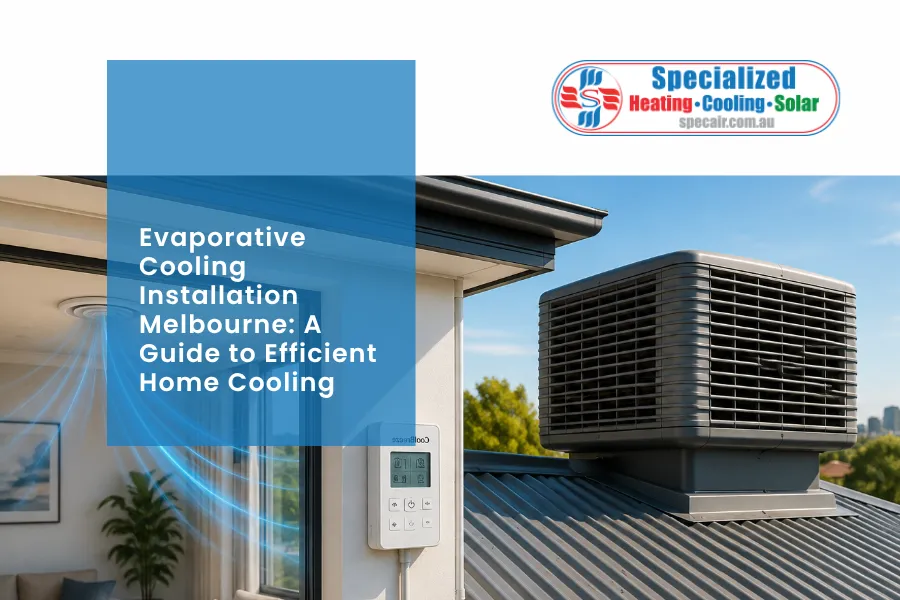
It’s easy for Melbourne summer to get very hot. There can be a cool morning but a dry afternoon which equals 40 degrees or more and makes your home feel like an oven. In Victoria, with the severe heat that comes with it, it becomes necessary for every family to keep their home cool, fresh, and comfortable during the severe heat.
However, running normal air conditioners often leads to big power bills that ruin your summer budget. That is why so many local families choose evaporative cooling systems in Melbourne wide. They bring a fresh, cool breeze into your house using water and simple air flow, while using far less electricity than refrigerated systems.
In this complete guide to evaporative cooling installation Melbourne services, we will cover everything you need to know. We will explain how these units work in our local weather, the main benefits, installation steps, system sizes, running costs, and easy maintenance tips.
In a ‘classic’ air conditioner, the air already in the house is used over and over again, so you need to make sure all doors and windows are closed. The evaporative cooling system does not operate by removing air from your home, but instead by bringing in fresh air from outside, passing it over wet pads and then blowing cool moist air directly into your rooms.
The evaporative air conditioning is like the cool sensation that you get when you get out of the swimming pool on a windy day. The evaporating water cools the air rapidly, before the cool air is carried through your house.
This system is ideal for dry hot weather and is ideal for the typical Melbourne summer heat wave. Dry air from regular air conditioners may lead to dry eyes, a scratchy throat, and dry skin. Evaporative units return a little moisture to the air, thus leaving your home comfortable and natural to breathe.
If you want a deeper look at how evaporative air conditioning works, from the wet pads to the fan and water pump, our explainer breaks it down in plain language.
Picking the right cooling unit for your house is a big choice. Choosing an evaporative cooler installation Melbourne team brings many great perks:
The evaporative cooling installation Melbourne job takes place in 5 key steps, ensuring cool air is delivered to every room correctly.
An installer checks your floor plan, ceiling height, and roof space. This helps them pick the exact unit capacity you need to cool your whole house without wasting energy.
The main cooling unit gets fixed onto your roof on a sturdy base. The team seals around the bottom carefully with waterproofing flashings to stop rainwater from leaking in during storms.
Flexible insulated pipes go through your roof space. These pipes connect the roof unit to air vents strategically placed in your bedrooms and main living areas.
Licensed tradespeople connect a cold-water pipe and electrical cable to the unit. They also fit a drain valve that flushes out old water regularly to keep the unit clean and fresh.
A simple control pad goes on your wall inside. The technician turns the system on, checks the airflow in every room, and shows you how to use it easily.
Getting the right unit size matters. A unit that is too small will struggle on hot 40-degree days. A unit that is too large will waste water and power needlessly.
| House Size | Floor Space Area | Airflow Needed | Good For |
|---|---|---|---|
| Small | Up to 130 m² | 7,000 – 9,000 m³/hr | 2-3 Bedroom Units & Single-Storey Townhouses |
| Medium | 130 m² – 220 m² | 10,000 – 12,000 m³/hr | Standard 3-4 Bedroom Houses |
| Large | 220 m² – 300+ m² | 13,000 – 15,000+ m³/hr | Large Two-Storey Homes & Open-Plan Houses |
When looking at evaporative cooling Melbourne setups next to split systems or ducted refrigerated air conditioning, here is how they compare.
Refrigerated air conditioners use heavy parts that consume lots of electricity. Because evaporative systems only power a small water pump and a fan, running your evaporative cooler all day often costs less than running one small split system in your main lounge room.
Refrigerated systems only work well when you keep doors and windows shut. Otherwise, the old air can drift out, and the cooling stays less steady. Evaporative cooling works the other way. You need windows open so warm air can leave. Then fresh air keeps moving through the rooms.
Evaporative systems work best on dry, hot summer days. They slow down slightly on rare muggy, humid days. Luckily, most hot Melbourne heatwaves are very dry.
It helps to know what shapes the price when planning your evaporative air conditioning installation budget.
A little bit of seasonal care keeps your unit running well for years.
Before hot weather starts, check the roof unit, wash off winter dust from the cooling pads with a hose, clean the water tray, and make sure water flows smoothly.
In autumn, turn off the water tap to the unit, drain out any left-over water from the tray, turn off the power switch, and put a cover over the roof unit to stop cold winter winds from blowing inside.
Book a trade service every 2 years. A technician will check the electrical parts, clean the water lines, test the motor, and make sure everything runs safely.
Running an evaporative cooling system in Melbourne usually costs around 20 to 50 cents an hour. This makes it up to 80% cheaper to run than traditional ducted refrigerated cooling systems during summer.
Yes, you should leave doors and windows slightly open for evaporative cooling to work best. The system relies on pushing hot indoor air outside while constantly blowing cool fresh air inside your home.
A normal evaporative cooler installation in Melbourne takes about 4 to 8 hours. Replacing an old roof unit takes half a day, while setting up a brand-new home with fresh ducting takes a full day.
Evaporative coolers work best in dry heat, which makes them ideal for typical Melbourne heatwaves. Performance drops a bit on humid days, but modern fans still keep air moving to help you stay comfortable.
Evaporative cooling pads usually last between 3 to 7 years depending on water quality and use. Good pads last longer if you clean them once a year to wash away salt and dirt buildup.
Yes, evaporative cooling works well in double-storey homes. Since heat rises to the top floor, placing vents upstairs lets cool air sink down, keeping both floors comfortable all day.
Before summer starts, clean off the cooling pads, clear leaves from around the roof unit, check the water tray, and test your wall controller. A trade service every two years keeps it running like new.
When summer heat hits Victoria, having a reliable cooling unit keeps your home comfortable. Specialized Heating and Cooling (Specair) brings years of local experience providing evaporative cooling installation Melbourne families count on.
Ready to cool your home for less money this summer? Contact our friendly team today to get a free quote and clear advice for your house layout.
Keeping multiple rooms comfortable without installing several outdoor air conditioning units can be challenging. A multi-head split system offers a practical solution by connecting multiple indoor units to a single outdoor unit, making it suitable for homes with limited outdoor space. When comparing the best multi head split system in Australia, consider the number of […]
Choosing an air conditioning system for your three-bedroom home involves considering comfort, installation costs and long-term energy use. Ducted air conditioning is a popular option for homeowners who want to maintain comfortable temperatures across multiple rooms without installing separate wall-mounted units. The total cost depends on several factors, including your home layout, system capacity, zoning […]
Gas Ducted Heating Melbourne: How Spec Air Designs and Installs Systems That Keep Homes Warm from Melton to Lynbrook Melbourne winters bring an occasional burst of freezing temperatures, icy winds and chilly mornings. To counter this drop in temperature, small space heaters and single split systems are not powerful enough to keep a whole household […]
Pakenham is a growing area with plenty of new housing estates and older family homes. Keeping your house comfortable through changing Victorian seasons requires a reliable heating and cooling setup. Standard heaters often struggle during hot summer days, while old cooling units fail to keep living rooms warm or cold on winter mornings. Getting a […]
